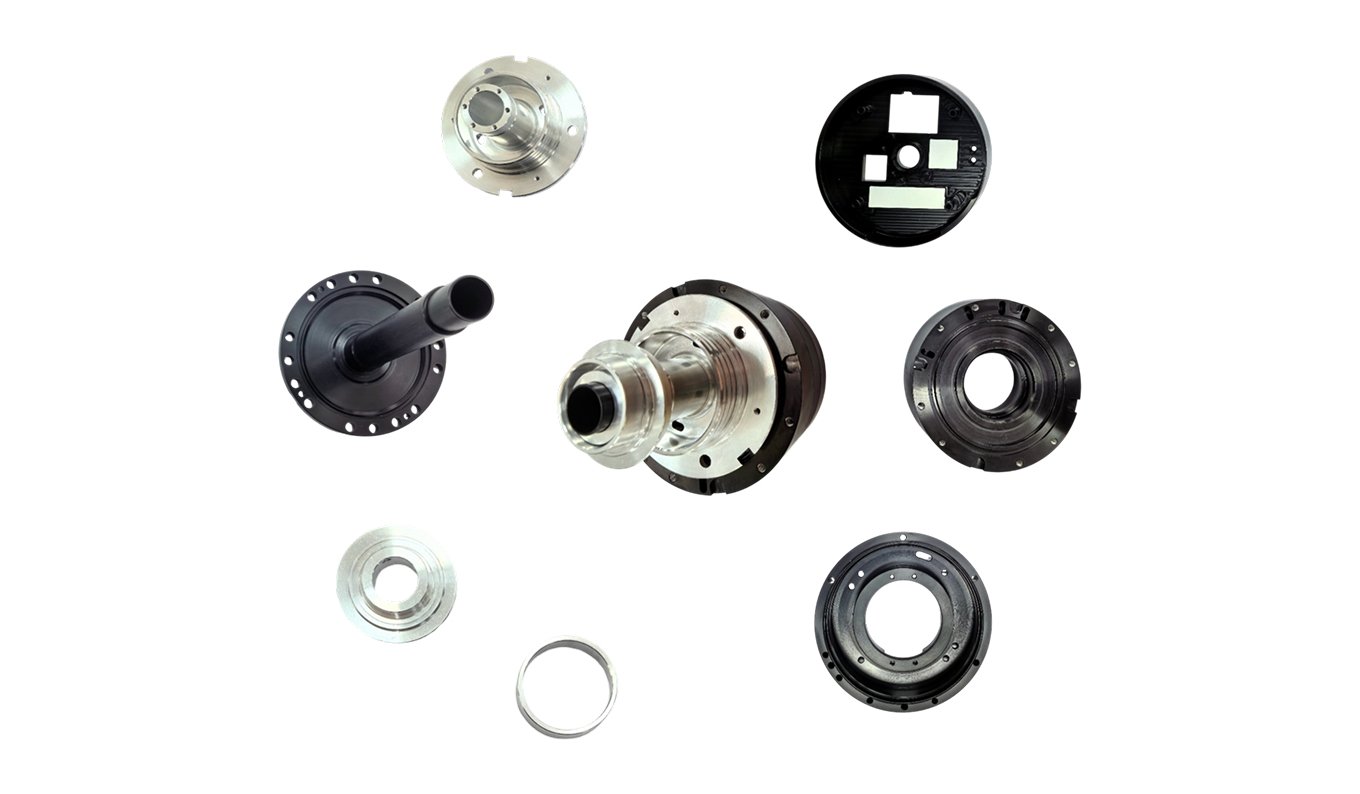

Rotary Joint Components
Actuators are a key determinant of robotics hardware costs, responsible for driving the movements of humanoid robots’ arms and legs. Typically installed at robotic joints, actuator systems consist of motors, reducers, encoders, and control units.
Based on motion types, actuators are classified into rotary actuators and linear actuators. Rotary actuators are primarily located in high-range-of-motion joints such as the shoulders and hips, where large-angle rotation is required. They represent the highest demand and bear the greatest torque loads in humanoid robots, including joints such as shoulders, elbows, hips, and knees.
In contrast, linear actuators are typically used in single-degree-of-freedom joints with smaller motion ranges. Rather than enabling large rotational movement, linear actuators provide precise linear push-pull motion, making them particularly suitable for applications requiring high dexterity, such as fingers and palms.